

The financial industry is moving toward digital asset ecosystems where blockchain technology is changing how ownership and investments operate. Traditional assets such as real estate, private equity, bonds, and investment funds often involve complex processes, limited accessibility, and multiple intermediaries.
Real World Asset (RWA) tokenization addresses these challenges by converting physical and financial assets into blockchain-based digital tokens. This approach improves accessibility, ownership management, and investment opportunities across global markets.
Platforms like Securitize have gained strong attention by creating infrastructure for digital securities and tokenized assets. As demand for tokenized investments grows, many businesses are exploring Securitize Clone Development to launch platforms for digital asset management and RWA investment ecosystems.
Koothan Infotech helps businesses build feature-rich RWA tokenization platforms like securities designed for growing digital asset markets.
Securitize Clone Development
Securitize Clone Development refers to creating a blockchain-powered platform inspired by the operational structure and functionality of Securitize. The goal is to build an ecosystem where businesses can tokenize real-world assets, onboard investors, manage ownership rights, and conduct secure transactions through blockchain networks.
A Securitize clone platform allows asset owners to convert ownership rights into digital tokens that can represent various assets such as:
Real estate properties
Private equity investments
Bonds
Treasury assets
Investment funds
Debt instruments
Commodities
Company shares
Alternative assets
The tokenization process transforms traditional ownership into blockchain-managed digital assets, allowing investors to access opportunities through a simplified investment environment.
The platform also includes management tools for administrators, asset issuers, and investors within a single ecosystem.
Why Launching an RWA Tokenization Platform Like Securitize?
The global investment market is rapidly moving toward digital asset infrastructure. Traditional investment systems often involve multiple operational barriers that affect accessibility and transaction processes.
Common limitations include:
Limited market participation
High administrative costs
Long settlement cycles
Geographic restrictions
Complex ownership procedures
Reduced liquidity opportunities
Launching an RWA tokenization platform like Securitize helps businesses create modern financial ecosystems designed to overcome these challenges.
Reasons businesses are entering this market include:
Global Investment Access
Blockchain technology removes location barriers and allows investors worldwide to participate in asset ownership.
Fractional Asset Ownership
Investors can purchase smaller portions of expensive assets, making investments accessible to a broader audience.
Improved Liquidity
Tokenization allows traditionally illiquid assets to become easier to distribute and trade.
Transparent Transactions
Blockchain records create visibility across ownership and transaction activities.
Better Operational Flow
Automation reduces manual processes and improves platform activities.As institutional interest in tokenization continues to grow, entering this market creates strong business opportunities.
Securitize Clone Development Company - Koothan Infotech
Koothan Infotech delivers blockchain development solutions focused on RWA tokenization platform development. Our development approach combines business strategy, blockchain architecture, and smart contract implementation to create investment platforms designed around operational goals.
Our team develops Securitize clone equipped with tokenization tools, investor modules, compliance features, and blockchain integrations.
Our development services include:
White-label solutions
Smart contract creation
Tokenization infrastructure development
Wallet integration
Multi-chain support
Investor dashboard systems
Security implementation
Post-launch technical support
We focus on creating solutions aligned with evolving digital asset markets.
Core Features In Securitize Clone
Building a successful tokenization platform requires a complete set of functionalities that support investors, asset issuers, and administrators. A Securitize clone should include advanced features that simplify asset management, ownership tracking, investment operations, and compliance activities.
Asset Tokenization Engine
The asset tokenization engine serves as the foundation of the platform. It converts real-world assets and financial products into blockchain-based digital tokens that represent ownership rights. Businesses can tokenize multiple asset categories and manage them through a centralized environment.
The tokenization engine supports:
Digital asset creation
Ownership mapping
Asset categorization
Token supply management
Asset registration workflows
This feature allows businesses to bring traditional assets into blockchain ecosystems with improved accessibility and management.
Fractional Ownership
Fractional ownership allows investors to purchase smaller portions of expensive assets rather than acquiring full ownership. This feature reduces investment barriers and opens opportunities for a larger audience.
Advantages include:
Lower entry requirements
Wider investor participation
Increased investment accessibility
Better asset distribution opportunities
This functionality helps attract both retail and institutional investors.
Investor Dashboard
The investor dashboard acts as a centralized space where users can manage investments and monitor platform activities. A user-friendly dashboard improves overall platform interaction and provides quick access to important information.
Dashboard features include:
Portfolio overview
Asset tracking
Transaction history
Investment performance updates
Notifications and alerts
Account management tools
Investors can view and manage all activities from a single interface.
Smart Contract Automation
Smart contracts automate important platform operations and reduce dependence on manual processes. These blockchain-based programs execute predefined actions automatically when conditions are met.
Smart contracts manage:
Token issuance
Ownership transfers
Investment processing
Yield calculations
Distribution mechanisms
Transaction execution
Automation improves operational accuracy and minimizes processing delays.
KYC and AML Verification
Identity verification plays an important role in tokenized investment ecosystems. KYC and AML procedures help validate user identities and maintain compliance requirements.
The system includes:
Identity verification
Document validation
Risk monitoring
Fraud prevention checks
User screening procedures
These processes help create a secure investment environment and support legal requirements.
Multi-Wallet Support
Wallet integration allows users to store, transfer, and manage digital assets directly within the platform. Supporting multiple wallets improves flexibility and user convenience.
Supported wallet types may include:
MetaMask
WalletConnect
Trust Wallet
Coinbase Wallet
Users can securely connect wallets and perform transactions within the platform ecosystem.
Multi-Blockchain Integration
Different blockchain networks provide unique advantages based on transaction speed, ecosystem support, and operational preferences. Multi-blockchain functionality allows businesses to support several networks.
Supported blockchains may include:
Ethereum
Polygon
Solana
Binance Smart Chain
Avalanche
This feature provides flexibility for businesses and users while expanding ecosystem compatibility.
Secondary Marketplace Support
Secondary marketplace functionality allows investors to trade tokenized assets after the initial purchase stage. This creates additional opportunities for liquidity and asset movement.
Marketplace capabilities include:
Asset listing functionality
Buy and sell activities
Ownership transfers
Trading management tools
Transaction monitoring
This feature helps create active market participation.
Yield Distribution System
Many tokenized assets provide returns, rewards, or profit-sharing mechanisms. The yield distribution system automates reward allocation and investment returns.
Distribution management includes:
Profit calculations
Automated payouts
Reward allocation
Revenue-sharing functions
Distribution schedules
This reduces manual intervention and improves transaction accuracy.
Admin Control Panel
The admin control panel provides complete oversight across platform operations. Administrators can monitor users, manage assets, review activities, and control platform settings.
Administrative controls include:
User management
Asset approval workflows
Transaction monitoring
Dashboard analytics
Compliance management
Platform settings
This module helps administrators manage daily operations and maintain platform activity efficiently.
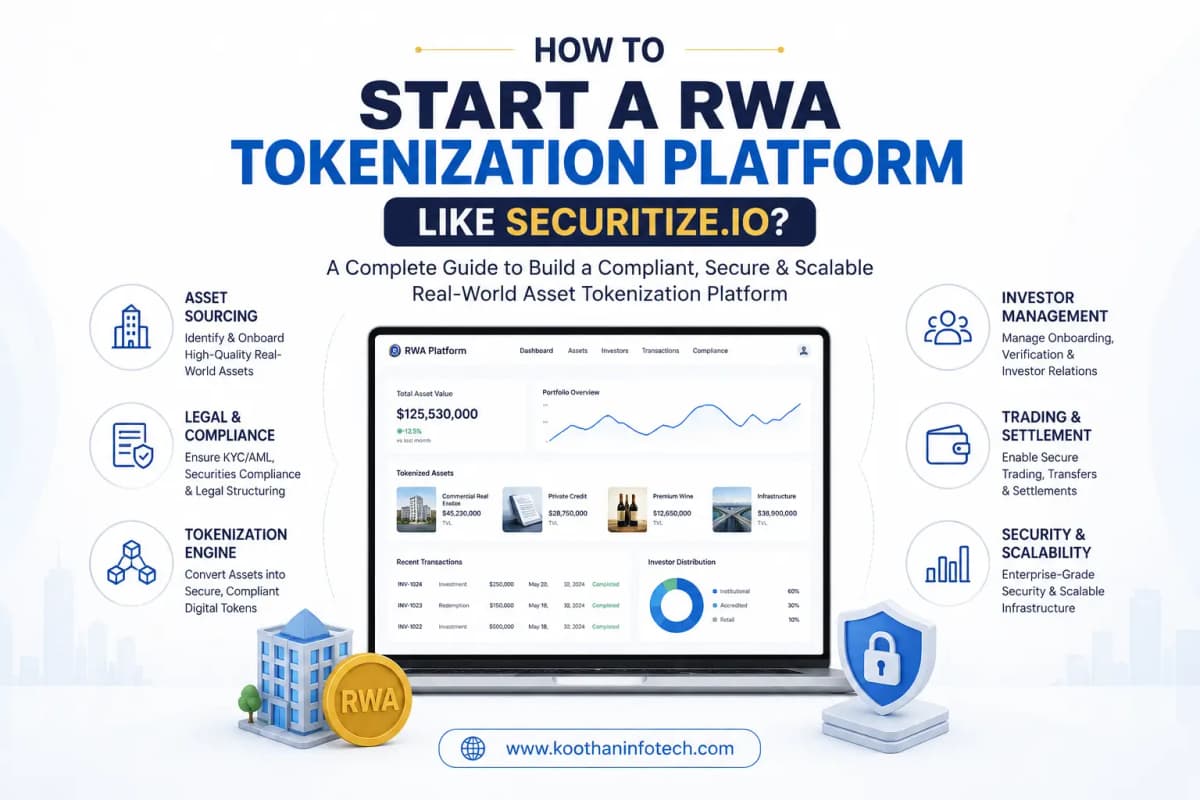
How To Start a RWA Tokenization Platform Like Securitize?
Launching a Real-World Asset (RWA) tokenization platform requires more than software development. It demands a structured business model, regulatory preparation, strong technology infrastructure, and a long-term growth strategy. Businesses entering the tokenization industry should focus on creating a platform that supports secure asset digitization, investor participation, and regulatory compliance.
Step 1
Market Research and Business Planning
Market research and business planning form the foundation of a successful RWA tokenization platform. Before beginning development, businesses should conduct detailed research to understand market demand, investor behavior, and industry trends. This process helps identify the right target audience, preferred asset categories, and potential revenue opportunities. Studying competitor platforms also provides insights into market gaps and user expectations.
Step 2
Define Asset Types
The next important step is selecting the real-world assets intended for tokenization. Asset selection plays a major role in platform structure because different asset classes involve unique legal requirements, ownership models, and transaction methods.
Common tokenized assets include:
Real Estate
Residential properties, commercial buildings, rental portfolios, and land assets can be divided into digital ownership shares.
Treasury Products
Government-backed treasury instruments provide stable investment opportunities and are increasingly becoming popular in tokenized ecosystems.
Private Equity
Businesses can tokenize ownership interests in private companies and startup investments.
Commodities
Precious metals, agricultural products, energy assets, and natural resources can be represented digitally.
Bonds
Traditional debt instruments can be transformed into digital assets with improved accessibility.
Alternative Assets
Luxury goods, art collections, intellectual property rights, and collectibles are also entering tokenization markets.
Choosing the asset category affects:
Smart contract design
Regulatory requirements
Investor permissions
Ownership distribution models
Marketplace architecture
Liquidity mechanisms
Businesses should identify asset classes that align with market demand and future scalability.
Step 3
Choose Blockchain Infrastructure
Choosing the right blockchain infrastructure is an important step when building an RWA tokenization platform, as it directly influences platform performance, security, transaction efficiency, and future growth. The selected blockchain acts as the foundation that supports asset issuance, smart contract execution, and digital transactions.
Ethereum
Polygon
Solana
Avalanche
Binance Smart Chain
Step 4
Implement Compliance Systems
Compliance remains one of the most important aspects of RWA tokenization. Since real-world assets involve legal ownership and financial regulations, businesses must integrate compliance frameworks during the initial development phase.
Regulatory implementation at later stages often becomes expensive and difficult.
Common compliance mechanisms include:
KYC Verification
AML Monitoring
Identity Validation
Investor Restrictions
Accreditation Checks
Transaction Monitoring
Benefits of early compliance integration:
Reduced legal risks
Better investor trust
Easier global expansion
Institutional readiness
Improved operational stability
Compliance should become part of platform architecture rather than an additional feature.
Step 5
Build Security Architecture
Security is one of the most critical requirements in tokenization platforms because digital assets, investor information, and financial transactions require strong protection mechanisms.A multi-layer security model helps reduce vulnerabilities and maintain user confidence.
Essential security layers include:
Encryption Systems
Wallet Security
Multi-Signature Support
Smart Contract Audits
Access Control Systems
API Security
Continuous Monitoring
Backup and Recovery Infrastructure
Security planning should continue after launch through updates, vulnerability testing, and continuous monitoring.
Building an RWA tokenization platform like Securitize requires a combination of strategic planning, blockchain infrastructure, legal preparation, and advanced security implementation. Businesses that invest time in market research, asset planning, compliance systems, and strong technology architecture can create a platform designed to attract investors and support business expansion. Success in tokenization depends on creating an ecosystem focused on security, accessibility, and efficient digital asset management.
Benefits of Launching an RWA Tokenization Platform Like Securitize
1. Increased Asset Liquidity
Traditional assets such as real estate, private equity, and commodities often face liquidity challenges due to lengthy selling processes. An RWA tokenization platform converts these assets into digital tokens, allowing investors to buy and sell ownership portions more efficiently and improving transaction flexibility.
2. Fractional Ownership Opportunities
Tokenization enables high-value assets to be divided into smaller digital units. This allows investors to purchase partial ownership instead of buying an entire asset, making investment opportunities accessible to a wider audience and increasing participation.
3. Global Investor Accessibility
An RWA tokenization platform can connect asset owners with investors from different regions through a digital ecosystem. This broader reach helps businesses attract more participants and expand investment opportunities beyond geographical limitations.
4. Faster Transactions and Settlements
Traditional asset transactions may involve multiple intermediaries and extensive documentation processes. Tokenized platforms streamline these operations using blockchain technology and smart contracts, enabling quicker asset transfers and reducing processing delays.
5. Improved Transparency and Security
Blockchain technology records transactions on an immutable ledger, creating greater transparency for asset ownership and transaction history. Investors can access verifiable records while businesses benefit from improved operational visibility and security.
6. Automated Operations Through Smart Contracts
Smart contracts automate important functions such as ownership transfers, dividend distribution, compliance procedures, and transaction execution. Automation reduces manual processes and improves overall platform efficiency.
Revenue Model of a Securitize Clone
1. Asset Tokenization Service Fees
Platforms can charge businesses and asset owners a fee for converting real-world assets into digital tokens. Fees may vary depending on asset type, token volume, and platform requirements.
2. Token Issuance Charges
Revenue can be generated through token creation and issuance services. Businesses launching new digital assets on the platform may pay fees for smart contract deployment and token setup.
3. Platform Onboarding Fees
Asset issuers and institutional clients can be charged onboarding fees during registration and account setup. This may include document verification and account configuration services.
4. Transaction Processing Fees
The platform can earn revenue by charging a small fee for each transaction completed within the ecosystem, including token transfers, purchases, and asset exchanges.
5. Secondary Marketplace Trading Fees
If the platform includes a secondary marketplace, businesses can collect fees whenever investors buy or sell tokenized assets between users.
6. Subscription-Based Plans
Premium subscription packages can provide advanced features such as detailed analytics, asset management tools, reporting systems, and enhanced user services.
7. KYC and Compliance Service Charges
Platforms can generate revenue through identity verification, KYC processing, AML monitoring, and compliance management services offered to users and businesses.
8. White-Label Licensing Services
Businesses can license the platform infrastructure to other companies through white-label solutions, generating revenue through licensing fees, customization services, and ongoing support packages.
Challenges and Solutions on Launching a Tokenization Platform Like Securitize
Although tokenization presents strong opportunities, businesses may encounter technical and operational challenges.
Challenges | Solutions |
Regulatory complexity | Implement legal and compliance frameworks |
Smart contract vulnerabilities | Conduct security audits |
Low Market Awarness | Develop educational resources |
User Onboarding Diffculties | Create simple interfaces |
Security risks | Apply encryption and monitoring |
Multi-chain management | Build flexible integration systems |
Why Choose Koothan Infotech to Create a RWA Tokenization Platform like Securitize?
Choosing the right RWA Tokenization Platform development company plays a major role in the success of an RWA tokenization platform. Building a platform similar to Securitize requires technical knowledge, blockchain expertise, smart contract capabilities, and a clear understanding of digital asset ecosystems. A development partner should not only build the platform but also support business goals and long-term expansion plans.
Koothan Infotech focuses on developing blockchain-powered RWA tokenization solutions that help businesses create digital asset ecosystems with advanced functionality and strong operational capabilities. Our team works closely with clients to build platforms aligned with specific business requirements and market objectives.
Conclusion
RWA tokenization is reshaping how traditional assets are managed and accessed across financial ecosystems. Platforms like Securitize have demonstrated the growing demand for digital asset infrastructure that supports ownership management, compliance, and investor participation.
Businesses entering this market today have opportunities to create modern investment ecosystems that connect blockchain technology with real-world assets.Koothan Infotech provides Securitize Clone Development solutions designed to help businesses build feature-rich tokenization platforms equipped for the future of digital asset investment.