


Picture this you run a small business, and there's a real opportunity right in front of you to grow. But you need funding to make it happen.
So you walk into a bank.
And what follows is a mountain of paperwork, background checks, and a waiting game that can stretch for weeks sometimes months.
For many small business owners, that delay is the difference between seizing an opportunity and watching it pass.
Meanwhile, on the other side of that equation, there are individuals sitting on savings, actively searching for smarter ways to grow their money.
Two groups with very real needs. And no direct way to reach each other.That gap is exactly where peer to peer lending platforms step in and it's why P2P lending platform development has become one of the most talked-about areas in fintech right now.
In this blog, we'll break down what P2P lending actually is, what goes into building a platform, the features that matter, and what it realistically costs.
Let's get into it.
What Is a Peer to Peer Lending Platform, and How Does It Work?
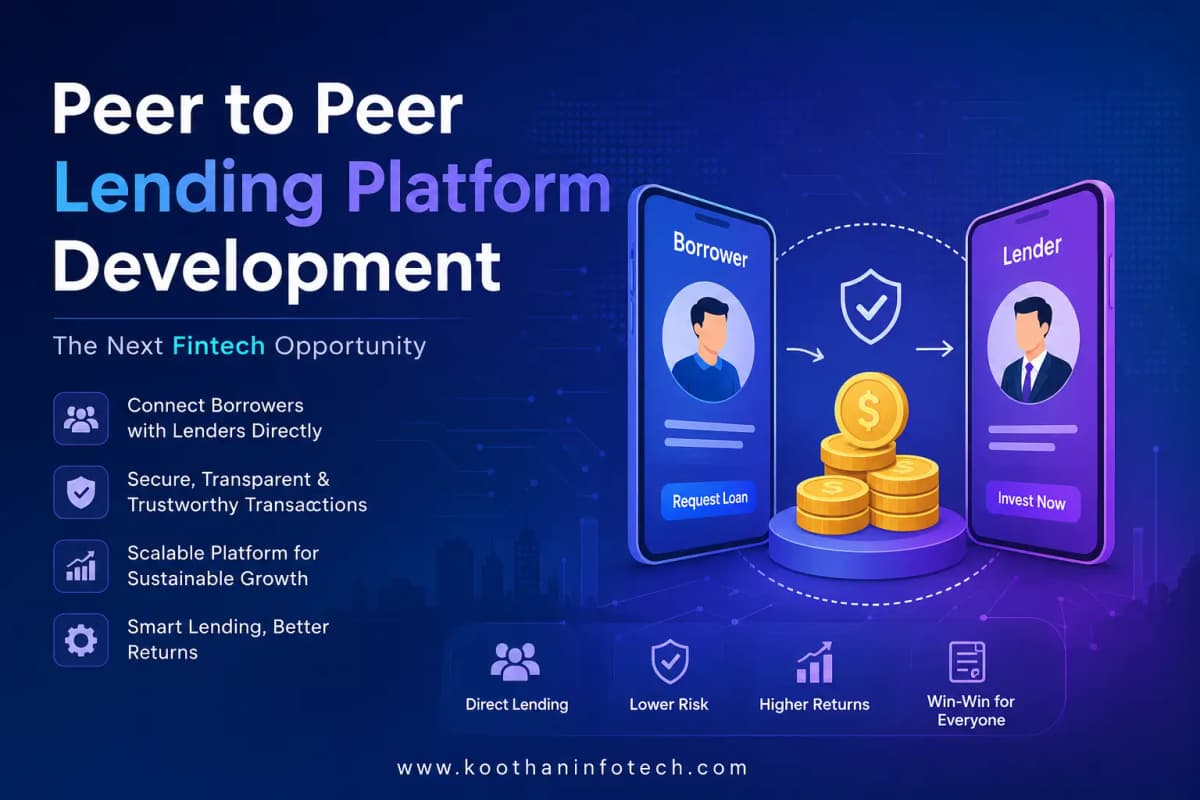
Peer-to-peer lending platform development involves creating a digital platform where borrowers and investors can connect, complete lending transactions, and manage loans in one platform.A peer to peer lending platform is an online system that directly connects people who need to borrow money with people who are looking to invest and earn returns no bank required in the middle.
Instead of a financial institution acting as the lender, the platform acts as the bridge. Borrowers get access to funds. Investors get access to returns. Everyone interacts through a single digital space.
Here's how the process typically works:
A borrower submits a loan request on the platform
The platform reviews and assesses the application
Investors browse available loans and choose which ones to fund
The loan amount is disbursed to the borrower
The borrower repays in regular installments
Investors receive their returns based on the agreed terms
The key difference from traditional lending? Banks lend their own capital. P2P platforms simply create the infrastructure for borrowers and investors to find each other and transact with confidence.
Why P2P Lending Platform Development Is a Smart Business Move?
The timing for building a P2P lending platform has never been better. More people than ever are comfortable managing their finances online, and trust in digital financial services continues to grow.
For businesses, the opportunity is clear. A well-structured P2P lending platform can generate revenue from multiple directions:
Loan origination fees charged when a loan is approved
Service charges on transactions processed through the platform
Investor fees for access to lending opportunities
Premium services for advanced tools, reports, or account features
What makes this model especially attractive is the diversity of users it naturally brings together — individual borrowers, small businesses looking for working capital, and investors of all sizes. When all three are active on the same platform, the system feeds itself.
The Growing Opportunity in Fintech
Peer to peer lending platform development sits at the intersection of two major trends: the digitization of financial services and the global hunger for faster, more accessible credit.
Traditional lending still involves significant friction credit checks, branch visits, paperwork, and approval queues. Borrowers, especially small businesses, are increasingly turning to digital alternatives that are faster and more transparent.
The global P2P lending market reflects this shift. It's projected to reach USD 215.18 billion in 2026 and USD 860.64 billion by 2033, growing at a CAGR of 21.9% during the forecast period.
For startups and established financial companies alike, building a P2P platform creates a real revenue stream while addressing a genuine gap in the market.
How to Build a Peer to Peer Lending Platform? Step by Step
Building a P2P lending platform isn't something you rush into. It requires careful planning, the right technology choices, and a clear understanding of both your users and the regulatory environment you're operating in.
Here's how the development process typically unfolds:
1. Research the Market and Understand Your Users
Before writing a single line of code, understand who you're building for. What do borrowers struggle with in the current system? What do investors look for when choosing where to put their money? What are competitors doing well and where are they falling short?
This research stage shapes every decision that follows.
2. Define Your Business Model and Requirements
Once you have market clarity, get specific about how your platform will work. Which lending model fits your audience? How will you generate revenue? What features do you actually need at launch vs. what can come later?
Clear requirements prevent costly rework during development.
3. Plan the Platform Architecture
Map out the full structure of the platform user journeys, loan workflows, system architecture, and data flows. Think through edge cases: what happens when a borrower misses a payment? How are disputes handled? This planning stage creates the blueprint everything else is built on.
4. Design the User Experience
The interface needs to feel intuitive for two very different types of users: borrowers who may not be financially sophisticated, and investors who want detailed data and control. Good UX design bridges that gap and drives adoption on both sides.
5. Build the Platform
This is where development begins in earnest frontend interfaces, backend logic, databases, APIs, loan management systems, and user dashboards. Each component needs to be built with scalability in mind, because a platform that works for 100 users needs to also work for 100,000.
6. Integrate Third-Party Services
A P2P lending platform doesn't work in isolation. It needs to connect with:
Payment gateways for fund transfers
Identity verification and KYC providers
Credit assessment tools
SMS/email notification systems
These integrations are what make the platform functional in the real world.
7. Test Thoroughly
Before any user sees the platform, it goes through rigorous testing functional testing, performance testing, security testing, and user acceptance testing. The goal is to catch problems before they cost you users or reputation.
8. Launch and Monitor
The launch isn't the finish line it's the starting gun. Monitor platform performance closely during the early weeks, gather user feedback, and stay alert to anything that isn't working as expected.
9. Maintain, Update, and Improve
The most successful platforms are the ones that keep getting better. Regular updates, new features, security patches, and compliance adjustments are all part of keeping a lending platform competitive and trustworthy over time.
Key Features Every P2P Lending Platform Needs
The features you build determine how well your platform serves borrowers, investors, and your own operations team. While the exact list will vary based on your business model, most successful P2P platforms include:
User registration and profile management smooth onboarding for both borrowers and investors
Identity verification and KYC to confirm who your users are and meet regulatory requirements
Loan application management a clear, structured process for submitting and reviewing loan requests
Borrower and investor dashboards personalized views with everything users need to manage their activity
Credit assessment tools automated or integrated tools to evaluate borrower risk
Loan tracking and repayment management real-time visibility into loan status and payment history
Payment gateway integration secure processing of disbursements and repayments
Notifications and alerts keeping users informed at every step
Reports and analytics data that helps users make better decisions and helps you run the platform more effectively
Security and Compliance - Non-Negotiable from Day One
A P2P lending platform handles some of the most sensitive data that exists personal identification, financial history, bank account details, and live transaction records. Security isn't a feature you add later. It has to be built in from the start.
Core security measures every platform should include:
End-to-end data encryption
Multi-factor authentication
Role-based access controls
Real-time fraud detection and monitoring
Regular security audits and penetration testing
Equally important is regulatory compliance. Depending on where your platform operates, you may be required to meet standards around KYC/AML (Know Your Customer / Anti-Money Laundering), data protection laws, and lending regulations.
Falling short on compliance doesn't just risk fines it destroys user trust, which is the one thing a lending platform absolutely cannot afford to lose.
How Much Does It Cost to Build a P2P Lending Platform?
Cost is one of the first questions every business asks, and it's one that genuinely depends on what you're building.
A basic p2p lending platform with essential lending functionality will cost significantly less than a feature-rich system with advanced credit scoring, automated investor matching, comprehensive analytics, and mobile apps for both platforms.
Factors that influence the total cost include:
The number and complexity of features
Third-party integrations required
Security and compliance requirements
Mobile app development (iOS and Android)
Ongoing maintenance and support
As a general range, custom P2P lending software typically costs between $15,000 and $100,000+, depending on scope and business requirements.
The best approach is to define your MVP (minimum viable product) clearly, launch with the core features, and expand as you learn from real user behavior.
Wrapping Up
Peer to peer lending is reshaping the way people borrow and invest and that's creating real opportunities for businesses that are ready to build in this space.Getting it right means more than just building an app. It means understanding your users, planning a solid architecture, delivering a seamless experience, and maintaining the trust of everyone on your platform through security and compliance.
This is exactly the kind of work we focus on at Koothan, as a fintech software development company. We help businesses approach P2P lending platform development in a clear, practical way — from the first planning conversation to long after launch.
If you're exploring this space and want to understand how it fits into your business plans, now is a good time to start that conversation.