


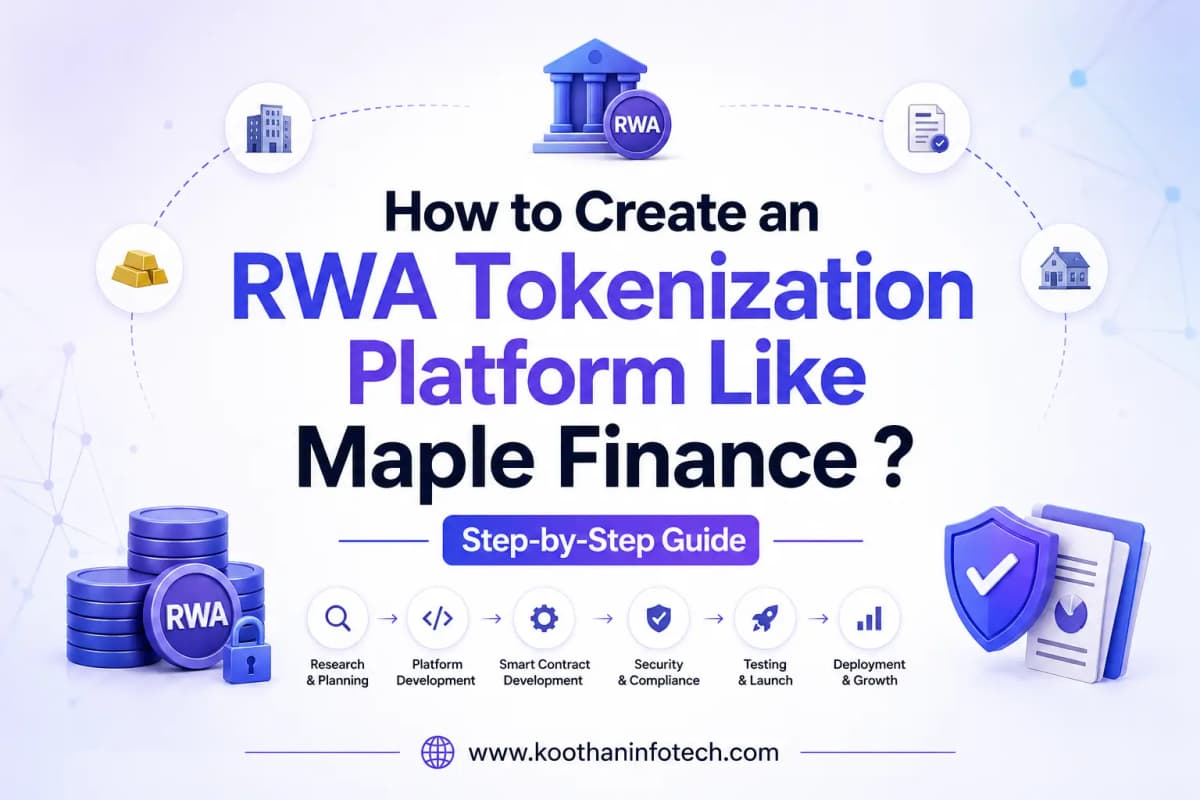
The financial industry is entering a new era where real-world assets like private credit, invoices, bonds, and real estate are moving onto blockchain networks through tokenization. What was once accessible only to banks and institutional investors is now becoming part of decentralized finance.
This transformation is exactly why platforms like Maple Finance are gaining huge attention in the Web3 market.
Unlike traditional DeFi lending platforms, Maple Finance focuses on institutional on-chain credit markets backed by real-world financial exposure. It combines blockchain transparency, smart contract automation, and institutional lending into a scalable financial ecosystem.
As the demand for RWA tokenization continues to grow, startups and enterprises are now looking to build secure, compliant, and scalable platforms similar to Maple Finance. But creating such a platform requires much more than basic blockchain development. It involves smart contract infrastructure, liquidity management, compliance integration, security architecture, and institutional-grade lending systems.
In this blog, we will explore everything you need to know about creating an RWA tokenization platform like Maple Finance, including its business model, architecture, core features, development process, monetization strategies, and technology stack.
Maple Finance Clone Development
Maple Finance clone development helps startups and enterprises launch a powerful RWA tokenization and institutional lending platform similar to Maple Finance with advanced DeFi capabilities. The platform is designed to bridge traditional finance and blockchain by enabling real-world asset-backed lending, liquidity pool management, and on-chain credit markets.
A Maple Finance clone allows businesses to offer secure and transparent lending services where institutional borrowers can access liquidity while investors earn passive yield through tokenized real-world assets. With smart contract automation, compliance integration, and institutional-grade security, the platform creates a scalable ecosystem for decentralized credit markets.
The development process includes:
RWA tokenization infrastructure
Institutional lending modules
Liquidity pool management
Smart contract development
KYC/KYB & AML integration
Yield generation mechanisms
Borrower risk assessment systems
Multi-chain blockchain support
Wallet & payment gateway integration
Secondary marketplace functionality
Businesses can choose between MVP development, white-label Maple Finance clone solutions, or fully customized platform development based on their budget, timeline, and business goals.
By launching a Maple Finance-like platform, startups can enter the rapidly growing RWA sector and generate revenue through tokenization fees, lending commissions, interest spreads, pool management fees, and secondary trading charges.
Why Entrepreneurs are Investing in RWA Tokenization Platforms Like Maple Finance?
The global financial ecosystem is moving toward tokenized economies. Entrepreneurs are entering this market because RWA tokenization platforms provide both long-term growth opportunities and multiple revenue streams.
Rising Institutional Interest
Large institutions are actively exploring blockchain-powered financial systems because tokenization reduces inefficiencies found in traditional markets.
Institutional investors now prefer:
Faster settlements
Transparent lending systems
Lower operational costs
Improved liquidity access
Automated financial workflows
This creates huge business opportunities for startups entering the RWA market.
Massive Market Potential
The tokenized real-world asset market is projected to grow significantly over the next few years. Assets worth trillions of dollars can potentially move on-chain.
Real estate
Treasury products
Credit markets
Debt instruments
Structured financial products
Entrepreneurs entering early can position themselves as industry leaders.
Increased Demand for Institutional DeFi
Traditional DeFi protocols mainly serve retail crypto users. But platforms like Maple Finance target institutional participants.
This institutional-grade approach creates opportunities for:
Higher transaction volumes
Stable liquidity
Long-term partnerships
Enterprise-level adoption
Better Revenue Opportunities
RWA tokenization platforms generate income through various streams such as:
Lending fees
Tokenization fees
Interest spreads
Pool management fees
Secondary trading commissions
Compliance services
This makes the business model highly scalable.
How Does a Maple Finance-Like RWA Tokenization Platform Work?
1. Asset Origination
The workflow of a Maple Finance-like platform begins with identifying valuable real-world assets that can be brought onto the blockchain network. These assets may include corporate credit, bonds, invoices, treasury products, and structured debt instruments. Once selected, the assets are analyzed, documented, and prepared for tokenization to ensure they meet the platform’s financial and operational requirements.
2. Verification & Compliance
Before any asset is tokenized, the platform performs strict verification and compliance procedures to maintain institutional trust and regulatory transparency. This process includes KYC verification, KYB validation, AML screening, legal due diligence, and documentation reviews. These compliance measures help the platform operate within legal frameworks while reducing risks related to fraud and unauthorized transactions.
3. Asset Tokenization
After successful verification, the approved real-world assets are converted into blockchain-powered digital tokens using smart contracts. These tokens represent ownership, lending exposure, or financial rights linked to the underlying assets. The tokenization process improves liquidity, transparency, and accessibility while enabling seamless interaction with decentralized financial systems.
4. Liquidity Pool Creation
Once tokenized, the digital assets are grouped into liquidity pools managed by pool delegates or platform administrators. Investors and liquidity providers can contribute funds to these pools and earn passive returns based on lending activities. This liquidity pool structure ensures efficient capital allocation and supports continuous borrowing and lending operations within the platform.
5. Borrower Credit Evaluation
Institutional borrowers applying for loans are evaluated through advanced credit assessment mechanisms instead of relying entirely on excessive crypto collateral. The platform analyzes financial health, credit history, institutional credibility, and risk assessment models before approving loans. This approach creates a more scalable and capital-efficient lending ecosystem for institutional participants.
6.Loan Distribution
After borrower approval, loans are distributed automatically through smart contracts without requiring traditional intermediaries. The automated lending process manages loan terms, repayment schedules, and interest calculations transparently on the blockchain. This reduces operational delays while improving security, efficiency, and trust between lenders and borrowers.
7. On-Chain Monitoring
Every activity within the platform, including lending, borrowing, repayments, interest calculations, and liquidity pool performance, is recorded on the blockchain network. This on-chain monitoring system provides complete transparency, real-time tracking, and tamper-proof transaction history for all participants. It also strengthens security and accountability across the entire RWA lending ecosystem.
Core Architecture of an RWA Tokenization Platform Like Maple Finance
User Dashboard Layer
The user dashboard layer acts as the main interaction interface for investors, borrowers, and liquidity providers. It includes wallet integration, asset deposits, APY tracking, portfolio management, lending pool access, and transaction history. A simple and user-friendly UI/UX helps improve user engagement and platform accessibility.
Borrower Management Module
The borrower management module handles institutional borrowing activities within the platform. It manages loan applications, credit scoring, borrower onboarding, collateral management, repayment tracking, and interest calculations. This module ensures secure and transparent lending operations for institutional participants.
Pool Management System
The pool management system manages liquidity pools and capital allocation within the platform. It supports pool creation, yield distribution, interest calculations, liquidity optimization, and risk-based pricing. Efficient pool management helps maintain stable lending and borrowing operations.
Smart Contract Infrastructure
The smart contract infrastructure automates core platform operations such as asset tokenization, loan execution, repayment processing, fee distribution, and liquidation mechanisms. Secure and audited smart contracts help ensure transparency, automation, and reliable platform performance.
Compliance Layer
The compliance layer ensures the platform follows regulatory and legal standards. It includes KYC/KYB verification, AML monitoring, sanctions screening, jurisdiction controls, and risk analysis systems. This layer helps build institutional trust and improves platform security.
Best Development Methods for Creating an RWA Tokenization Platform
There are three major ways to build a Maple Finance-like platform.
1. MVP Development
An MVP helps startups launch faster with essential features.
The MVP usually includes:
Lending pools
Borrower onboarding
Basic tokenization engine
Smart contracts
Wallet integration
Benefits of MVP Development
Faster launch
Market validation
Investor attraction
Reduced development cost
User feedback collection
This method is ideal for startups entering the market quickly.
2. White Label Maple Finance Clone
A white-label solution is a ready-made platform that can be customized based on business requirements.
It includes:
Admin dashboards
Pool management systems
Compliance modules
Borrower onboarding
Security integrations
Benefits of White Label Development
Quick deployment
Lower development cost
Faster ROI
Scalable infrastructure
Reduced technical complexity
This is suitable for businesses seeking faster market entry.
3. Custom Development from Scratch
Custom development provides complete architectural control.
Benefits
Unique branding
Fully customized features
Better scalability
Advanced integrations
Long-term flexibility
This method is ideal for enterprises with larger budgets and long-term goals.
Essential Features of a Maple Finance Clone
RWA Tokenization Engine
The RWA tokenization engine is the core feature that enables the conversion of real-world assets into blockchain-powered digital tokens. It supports the tokenization of financial assets such as loans, bonds, invoices, treasury-backed products, and real estate assets securely and transparently. This engine verifies asset ownership, creates digital representations through smart contracts, and ensures the tokenized assets can be managed, transferred, and traded within the blockchain ecosystem. A powerful tokenization engine improves liquidity, fractional ownership opportunities, and global accessibility for institutional investors.
On-Chain Lending Pools
On-chain lending pools are designed to facilitate decentralized lending and borrowing operations within the platform. These pools allow liquidity providers and institutional investors to deposit funds that are allocated to verified borrowers through transparent lending mechanisms. Every transaction, fund allocation, repayment, and yield distribution is recorded on-chain, ensuring complete transparency and trust. This feature helps create efficient capital flow while enabling investors to earn passive income through yield-generating lending pools.
Smart Contract Automation
Smart contract automation plays a vital role in streamlining the entire lending and tokenization process without manual intervention. Smart contracts automatically execute loan agreements, interest calculations, repayment schedules, fee distribution, liquidation triggers, and settlement processes securely on the blockchain. By automating critical financial operations, the platform reduces operational risks, minimizes delays, and ensures transparent and tamper-proof execution of transactions for both borrowers and lenders.
KYC/KYB Integration
KYC and KYB integration ensures that all users and institutional participants comply with legal and regulatory requirements before accessing the platform. This feature verifies the identity of individual users, businesses, and institutional borrowers through document validation, AML screening, and risk analysis procedures. Integrating KYC/KYB systems helps prevent fraudulent activities, unauthorized access, and money laundering while building trust among investors, financial institutions, and regulatory authorities.
Multi-Asset Support
Multi-asset support enables the platform to tokenize and manage a wide range of real-world financial assets within a single ecosystem. This includes loans, bonds, invoices, treasury products, structured debt instruments, and real estate-backed assets. By supporting multiple asset classes, the platform can attract diverse investors and institutional participants while creating more opportunities for liquidity generation, asset diversification, and portfolio expansion.
Secondary Market Trading
Secondary market trading functionality allows users to buy, sell, and trade tokenized assets after their initial issuance. This feature improves liquidity by enabling investors to exit positions or transfer ownership without waiting for asset maturity. A built-in secondary marketplace increases trading activity, enhances price discovery, and creates a more flexible investment environment for both institutional and retail participants.
Risk Assessment Engine
The risk assessment engine evaluates borrower credibility and financial stability using advanced credit scoring models and AI-driven analytics. Instead of relying solely on overcollateralized assets, the platform analyzes factors such as credit history, repayment capacity, institutional reputation, and financial performance before approving loans. This feature helps reduce lending risks, improve capital efficiency, and maintain a stable institutional lending ecosystem.
Analytics Dashboard
The analytics dashboard provides users with real-time insights into platform activities, lending performance, and financial metrics. It allows investors and administrators to monitor pool performance, borrower activity, yield generation, liquidity metrics, repayment status, and market trends from a centralized interface. Advanced reporting and analytics tools help users make informed financial decisions while improving operational transparency across the platform.
Institutional-Grade Security
Institutional-grade security ensures the protection of platform assets, user data, and financial transactions against cyber threats and unauthorized access. This feature includes multi-signature wallet integration, role-based access control, smart contract audits, encrypted data storage, secure custody management, and real-time monitoring systems. Strong security architecture is essential for building investor confidence and maintaining the reliability of the RWA tokenization platform.
Step-by-Step Development Process of an RWA Tokenization Platform Like Maple Finance
Step 1: Select Your RWA Niche
The first step is choosing the right RWA niche based on your business goals and target market. Popular niches include real estate tokenization, invoice financing, trade finance, treasury-backed lending, and institutional credit. Selecting a specialized niche helps improve market positioning, investor targeting, and business scalability.
Step 2: Choose Blockchain Infrastructure
Choosing the right blockchain network is essential for platform performance, scalability, and security. Popular blockchain networks like Ethereum, Polygon, and Solana are commonly used for RWA platforms. Factors such as gas fees, interoperability, scalability, and institutional adoption should be considered before selection.
Step 3: Design Platform Architecture
The platform architecture defines the overall structure and workflow of the RWA ecosystem. It includes important modules such as liquidity pools, borrower management systems, smart contracts, compliance infrastructure, and risk assessment engines. A scalable architecture ensures smooth and secure platform operations.
Step 4: Smart Contract Development
Smart contracts automate critical platform operations such as asset tokenization, lending, repayments, interest distribution, and fee management. Since financial transactions are involved, the smart contracts must be securely developed, optimized, and audited to avoid vulnerabilities and ensure reliable performance.
Step 5: Integrate Compliance Systems
Compliance integration helps the platform follow legal and financial regulations. This process includes AML screening, KYC/KYB verification, sanctions screening, and jurisdiction management systems. Strong compliance infrastructure improves institutional trust and platform credibility.
Step 6: Platform Testing & Security Audit
Before launch, the platform undergoes complete testing and security audits to identify bugs, vulnerabilities, and performance issues. This includes penetration testing, smart contract audits, UI testing, and stress testing. Proper testing ensures secure and smooth platform functionality.
Step 7: Launch & Institutional Onboarding
After deployment, the platform is launched for institutional users and investors. This stage focuses on marketing, liquidity growth, institutional onboarding, partnership building, and platform monitoring. Continuous updates and post-launch support help maintain long-term platform success.
How To Make Money using Maple Finance Clone?
Launching an RWA tokenization platform similar to Maple Finance opens the door to multiple revenue opportunities and recurring income streams. By connecting institutional borrowers and liquidity providers through blockchain infrastructure, businesses can generate sustainable profits while offering transparent and efficient financial services.
Tokenization Fees
The platform can charge fees for converting real-world credit exposures, structured debt instruments, and asset-backed investments into digital tokens. As more assets enter the ecosystem, tokenization services become a consistent source of revenue.
Loan Processing Fees
For every successful borrowing request processed through the platform, loan origination or processing fees can be collected. This creates a direct revenue stream from lending activities within the ecosystem.
Interest Spread Revenue
Platforms can earn from the interest rate difference between lenders and borrowers. A portion of the interest generated through loans can be retained as platform revenue while distributing returns to liquidity providers.
Pool Management Fees
Delegated pool managers often oversee lending pools and investment strategies. The platform can generate income through annual management fees, performance-based commissions, and capital deployment charges.
Secondary Market & Liquidity Fees
When users trade tokenized loan positions or pool shares in secondary markets, transaction and liquidity fees can be applied. Increased trading activity can create long-term recurring revenue.
Tech Stack Utilization to Create a Maple Finance-Like RWA Tokenization Platform
Building a secure and scalable RWA tokenization platform requires a robust technology stack that combines blockchain infrastructure, smart contracts, compliance systems, and modern development frameworks.
Blockchain Networks: Ethereum, Solana, Polygon, and other scalable ecosystems
Smart Cotract Languages: Solidity, Vyper
Frameworks & Development Tools: Hardhat, Truffle, Foundry
Backend Infrastructure: Node.js, Python, Express.js
Frontend Development : React.js, Vue.js, TypeScript
Compliance & Identity Integration: KYC/KYB verification, AML screening, risk assessment systems
Database & Storage Layer: PostgreSQL, MongoDB
This technology combination ensures scalability, security, transparency, and regulatory readiness for institutional-grade RWA platforms.
Koothan Infotech – Your Reliable Partner to Create an RWA Tokenization Platform
Koothan Infotech is a leading blockchain development company specializing in advanced RWA tokenization platform solutions for startups and enterprises. We help businesses build secure, scalable, and compliance-ready ecosystems that enable seamless real-world asset tokenization.
Our experienced development team delivers end-to-end services tailored to business requirements while integrating sustainable monetization strategies for long-term profitability. From architecture planning and smart contract development to deployment and post-launch support, every stage is handled with precision.
We do more than build a full-scale RWA platform we provide continuous support and maintenance services to help your business remain competitive in an evolving digital landscape.
Get a customized project quotation today and start building your next-generation RWA tokenization platform with confidence.